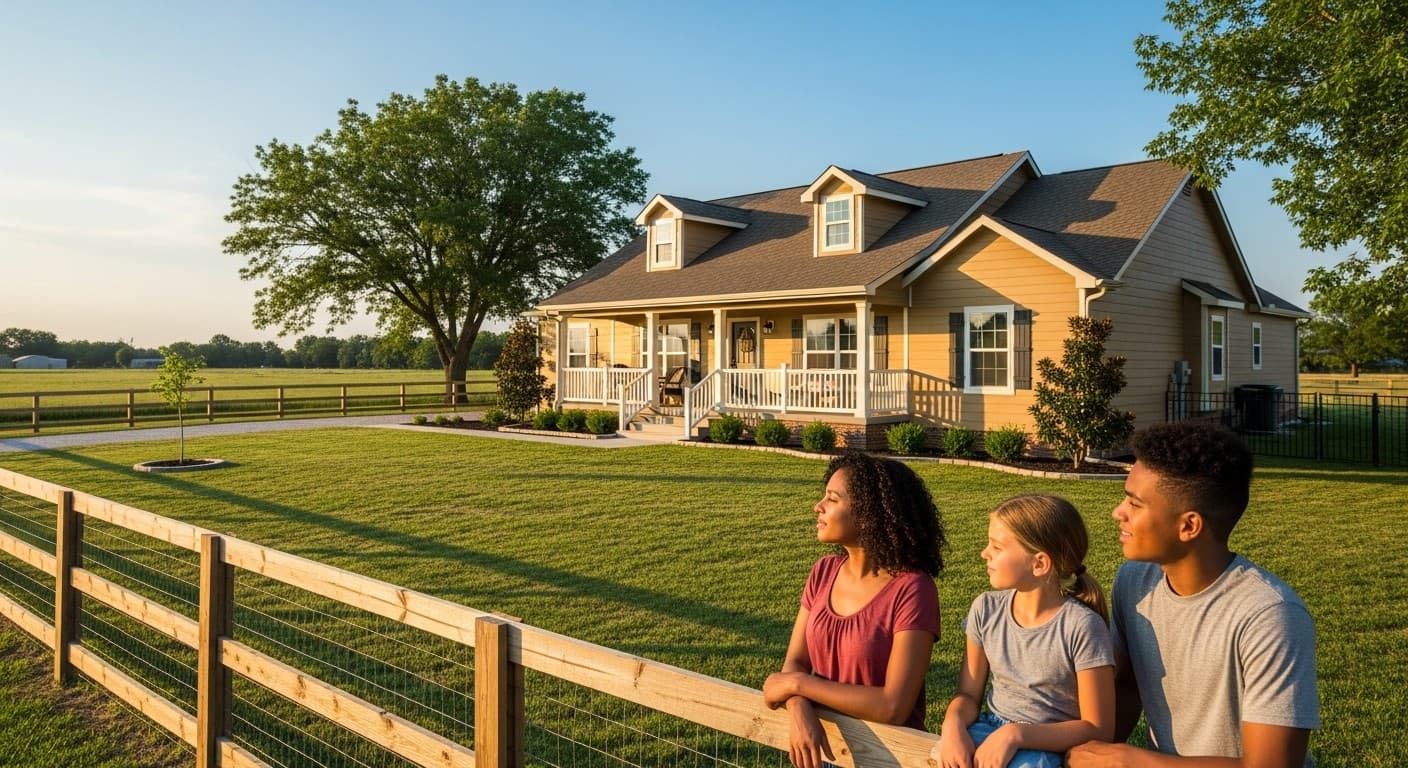

USDA rural home loans provide a path to homeownership that many buyers overlook. These government-backed mortgages require no down payment, offer competitive interest rates, and cover a surprisingly broad geographic area. Despite the name, you don't need to buy a farmhouse or live miles from civilization. Many suburban communities and small towns qualify under current USDA eligibility maps.
The program serves low to moderate income households who want to purchase a primary residence in eligible areas. Understanding how USDA loans work, what they require, and when they make financial sense compared to alternatives can save you thousands over the life of your loan. This guide breaks down the requirements, costs, and application process.
We work with clients who assume they don't qualify for USDA financing, only to discover their target neighborhood falls within program boundaries.
Why USDA Rural Home Loans Open Doors Other Mortgages Can't
The zero down payment feature sets USDA loans apart from nearly every other mortgage option. While FHA loans require a minimum 3.5% down payment and conventional loans typically need at least 3%, USDA financing allows qualified buyers to finance 100% of the purchase price. For a $200,000 home, that eliminates the need to save $6,000 to $7,000 upfront.
USDA loans also permit sellers to contribute up to 6% of the purchase price toward closing costs, and buyers can roll the upfront guarantee fee into the loan amount. The combination means you can potentially close on a home with minimal cash out of pocket.
Geographic Availability Surprises Most Buyers
The term "rural" creates misconceptions about where USDA loans work. According to current USDA Rural Development maps, approximately 97% of the United States landmass qualifies as eligible. This includes many suburban areas, small cities, and communities within commuting distance of major metropolitan areas.
Population density determines eligibility more than distance from urban centers. Towns with populations under 35,000 typically qualify, and even some areas with up to 50,000 residents can be eligible depending on their relationship to larger cities.
Interest Rate Competitiveness
USDA loan rates typically match or beat conventional mortgage rates. Because the USDA guarantees a portion of each loan, lenders face reduced risk and can offer favorable pricing. We often see USDA rates come in 0.25% to 0.50% lower than comparable FHA loans, which translates to meaningful monthly savings.

On a $250,000 loan, a 0.25% rate difference equals approximately $35 per month or $12,600 over a 30-year term. Combined with the zero down payment requirement, the total cost of ownership can be substantially lower than alternatives.
What USDA Rural Home Loans Actually Cover (And Where They Don't)
Property eligibility operates on two levels: geographic location and property condition. Both must meet USDA standards for a loan to proceed. You can verify property eligibility through the USDA Property Eligibility website by entering a complete address. The system returns an immediate determination showing whether the location qualifies.
Property Type and Condition Standards
USDA loans finance single-family homes, townhouses, condominiums approved by the USDA, and certain manufactured homes that meet specific construction standards. The property must serve as your primary residence. Investment properties, vacation homes, and income-generating properties don't qualify.
The home must meet basic safety, structural soundness, and livability standards. USDA appraisers evaluate properties more thoroughly than conventional appraisals, looking for issues that affect health and safety. Homes needing significant repairs may require those corrections before closing.
What disqualifies a house from a USDA loan includes properties with in-ground swimming pools in some regions, homes on acreage that generates substantial farm income, and properties with additional dwelling units that could be rented separately. The pool restriction varies by state and local USDA office.
The "Rural" Definition in Practice
What is considered rural for a USDA loan depends on census data and population metrics rather than visual appearance. A neighborhood with sidewalks, street lights, and proximity to shopping centers can still qualify if it falls outside designated metropolitan boundaries and meets population thresholds.
Some states have broader eligible areas than others. Much of New Hampshire qualifies outside the immediate Portsmouth and Manchester metro areas. What is the income limit for a USDA loan in NH varies by county and household size, but the geographic eligibility extends throughout most of the state's smaller communities and towns.
The Real Income and Credit Requirements for USDA Loan Approval
USDA loans target low to moderate income households, which the program defines as earning no more than 115% of the area median income (AMI). The specific dollar threshold varies significantly by location and household size. A four-person household in a lower-cost rural area might have an income limit of $90,000, while the same household in a higher-cost region could qualify with income up to $110,000 or more.
The USDA calculates qualifying income differently than conventional loans: they count all household income, not just borrower income. If adult children, parents, or other relatives live in the home and contribute financially, their income factors into the eligibility calculation even if they're not on the loan.
State-Specific Income Thresholds
What are the requirements for a USDA loan in Arkansas includes income limits that currently range from approximately $86,850 for a household of one to four people in lower-cost counties, up to $114,650 in higher-cost areas. These figures adjust annually based on HUD's median income data.
The USDA publishes income limit tables by state and county on their website. Before applying, verify your household income against the limits for your specific target area.
Credit Score Expectations and Flexibility
Most USDA-approved lenders require a minimum credit score of 640 for streamlined automated underwriting approval. Borrowers with scores below 640 can still qualify through manual underwriting, but the process takes longer and requires stronger compensating factors like significant cash reserves or a low debt-to-income ratio.

Photo by Kelly Sikkema on Unsplash
The USDA doesn't impose a hard minimum credit score requirement, leaving that decision to individual lenders. Some approved lenders will work with scores as low as 580 if the overall credit profile shows responsible payment history.
Recent bankruptcies and foreclosures create waiting periods. Chapter 7 bankruptcy requires a three-year waiting period from discharge date, while Chapter 13 allows qualification after 12 months of satisfactory payment performance. Foreclosures typically require a three-year waiting period.
Debt-to-Income Ratio Requirements
USDA underwriting guidelines prefer a debt-to-income ratio at or below 41%, though ratios up to 44% can be approved with compensating factors. The calculation includes your proposed mortgage payment (principal, interest, taxes, insurance, and the annual USDA guarantee fee) plus all recurring monthly debt obligations divided by your gross monthly income.
Strong compensating factors that support higher DTI ratios include excellent credit scores above 680, significant cash reserves equal to three or more months of mortgage payments, minimal increase between current housing payment and proposed payment, or a history of managing higher debt levels.
How USDA Rural Home Loans Compare to FHA and Conventional Financing
Choosing between USDA, FHA, and conventional financing depends on your down payment capacity, location, income level, and long-term homeownership plans. Each program serves different buyer profiles and offers distinct advantages.
USDA loans eliminate the down payment requirement entirely, while FHA requires 3.5% down and conventional loans need 3% to 5% for most first-time buyers. On a $200,000 purchase, that represents $0 down for USDA versus $7,000 for FHA or $6,000 to $10,000 for conventional financing.
Mortgage Insurance Cost Comparison
All three loan types require mortgage insurance when borrowing more than 80% of the home's value, but the costs differ substantially. USDA charges a 1% upfront guarantee fee (typically financed into the loan) plus an annual fee of 0.35% of the remaining loan balance. On a $200,000 loan, that equals $2,000 upfront and approximately $58 per month in the first year.
FHA loans charge 1.75% upfront mortgage insurance premium plus annual premiums ranging from 0.45% to 1.05% depending on loan amount and term. For most borrowers, FHA's annual premium runs 0.85%, equaling approximately $142 per month on a $200,000 loan. FHA mortgage insurance remains for the life of the loan if you put down less than 10%.
Conventional loans with less than 20% down require private mortgage insurance (PMI) that typically costs 0.5% to 1% annually. The advantage is that PMI automatically cancels once you reach 22% equity through payments and appreciation.
When Each Loan Type Makes the Most Sense
USDA loans work best when you're buying in an eligible area, meet income limits, have limited down payment savings, and plan to stay in the home long enough to benefit from the lower monthly costs.
FHA loans serve buyers in any location, including urban areas where USDA doesn't apply. They also accommodate lower credit scores more easily and allow higher debt-to-income ratios.
Conventional loans make sense when you have 5% to 20% available for a down payment, want the flexibility to cancel mortgage insurance after reaching 20% equity, or exceed USDA income limits.
Total Cost Comparison Over Time
On a $200,000 purchase with a 6.5% interest rate, here's how the programs compare:
- USDA: $0 down, $1,264 monthly payment (including $58 guarantee fee), $2,000 upfront fee financed
- FHA: $7,000 down, $1,342 monthly payment (including $142 MIP), $3,500 upfront premium financed
- Conventional: $10,000 down, $1,320 monthly payment (including $125 PMI), no upfront premium
The USDA option saves $78 monthly compared to FHA and $56 compared to conventional, while requiring $7,000 to $10,000 less cash at closing. Over five years, USDA saves $4,680 compared to FHA and $3,360 compared to conventional.

Photo by Artful Homes on Unsplash
The Step-by-Step USDA Loan Application Process Explained
The USDA loan process follows a similar timeline to conventional financing but includes additional eligibility verification steps. From application to closing typically takes 30 to 45 days, though complex income documentation or property eligibility questions can extend the timeline.
Start by finding a USDA-approved lender. Not all mortgage companies participate in the USDA program, and those that do vary in their experience and efficiency.
Pre-Qualification and Documentation
Pre-qualification begins with providing income documentation, credit authorization, and basic financial information. For employed borrowers, this includes recent pay stubs covering 30 days, W-2 forms from the past two years, and two months of bank statements. Self-employed applicants need two years of personal and business tax returns plus a year-to-date profit and loss statement.
The lender verifies your income against USDA limits for your target area and household size. They also pull credit and calculate your debt-to-income ratio to determine preliminary eligibility.
Property Search and Eligibility Verification
Once pre-qualified, verify property eligibility before making offers. The USDA eligibility website provides instant determinations for specific addresses. Real estate agents familiar with USDA financing can help identify eligible areas and avoid wasting time on properties that won't qualify.
Underwriting and Appraisal
After you're under contract, the lender orders a USDA appraisal. The appraiser evaluates both market value and property condition, checking for health and safety issues that might prevent approval. Common problems include faulty electrical systems, roof damage, peeling paint on homes built before 1978, and inadequate heating systems.
The underwriter reviews your complete financial profile, verifies employment and income, examines credit history, and confirms the property meets USDA standards.
Common Delays and How to Prevent Them
Income documentation causes the most frequent delays. Self-employed borrowers should have tax returns, business licenses, and profit and loss statements ready before applying.
Property condition issues discovered during appraisal can stall closing. Required repairs must be completed and re-inspected before the USDA will approve the loan. Negotiating repair responsibilities with the seller upfront, or choosing properties in good condition, prevents these delays.
Understanding USDA Guarantee Fees and Ongoing Costs
USDA loans charge two types of guarantee fees that function similarly to mortgage insurance on other loan types. The upfront guarantee fee equals 1% of the loan amount and can be financed into the mortgage. On a $200,000 loan, that adds $2,000 to your principal balance.
The annual guarantee fee currently runs 0.35% of the remaining loan balance, paid monthly as part of your mortgage payment. This fee decreases slightly each year as your principal balance drops. On that same $200,000 loan, the first year's annual fee totals $700, or approximately $58 per month.
How USDA Fees Compare to PMI Long-Term
The annual USDA guarantee fee remains for the life of the loan, similar to FHA mortgage insurance on loans with less than 10% down. Unlike conventional PMI, which cancels at 22% equity, the USDA fee continues even after you've built substantial equity.
However, the 0.35% annual rate is significantly lower than typical PMI rates of 0.5% to 1% and much lower than FHA's 0.85% annual premium. Buyers who stay in USDA loans long-term can refinance to conventional mortgages once they have 20% equity to eliminate the ongoing guarantee fee.
Other Closing Costs to Expect
Beyond the USDA guarantee fee, expect standard closing costs including appraisal fees ($450 to $650), credit report charges ($30 to $50), title insurance and settlement fees ($1,000 to $2,000 depending on location), and lender charges for processing and underwriting ($500 to $1,500).

Photo by Masjid MABA on Unsplash
Total closing costs typically run 2% to 5% of the purchase price. On a $200,000 home, budget $4,000 to $10,000 for closing costs. Sellers can contribute up to 6% toward these expenses, and the upfront guarantee fee can be financed, reducing your cash requirement at closing.
Your Next Steps: Getting Pre-Approved for a USDA Rural Home Loan
Getting pre-approved for a USDA loan requires gathering documentation, choosing an experienced lender, and verifying your target area qualifies under current eligibility maps. Start this process before house hunting to understand your budget and strengthen your position when making offers.
Collect two years of W-2 forms, recent pay stubs covering 30 days, two months of bank statements for all accounts, and documentation of any additional income sources. Self-employed buyers should add two years of personal and business tax returns plus a current profit and loss statement.
Questions to Ask Potential Lenders
Not all USDA-approved lenders have equal experience with the program. Ask how many USDA loans they close monthly, what their average timeline runs from application to closing, and whether they handle underwriting in-house or send files to a third party.
Confirm their minimum credit score requirements and whether they offer manual underwriting for scores below 640.
Verifying Property Eligibility Before You Search
Use the USDA Property Eligibility website to check addresses in your target neighborhoods before scheduling showings. This prevents falling in love with homes that won't qualify and helps you focus your search on eligible areas.
Timeline Expectations and Planning
Plan for 30 to 45 days from accepted offer to closing for straightforward USDA loans. Complex income documentation, property condition issues, or manual underwriting can extend this to 60 days. Communicate realistic timelines to sellers when negotiating contracts.
We help clients determine whether USDA financing offers the best value for their specific situation, or whether waiting to save a larger down payment for conventional financing makes more sense long-term. The right choice depends on your timeline, savings capacity, target location, and how long you plan to own the home. Understanding all your options, with real numbers comparing total costs over your expected ownership period, leads to confident decisions that support your financial goals.

Written by
Joell Pimentel
Bilingual Mortgage Loan Officer helping families and investors navigate home financing with clarity and confidence.
Get in touch